5 Warning Signs Heartburn & Reflux is actually Diaphragm related — Not "Just acid, allergies & stress"

By Dr. Harvey Hunt Ent specialist
Reading Time: 10 minutes
Published: March 1, 2026
Can’t sleep because of constant Heartburn and reflux - Your not imagining it.
Constant heartburn and regurgitation that never quite goes away. It’s present when waking up, when trying to eat, and when lying down at night.
Most doctors will tell you it’s “just acid reflux” . They’ll suggest acid reducers or lifestyle changes. And when the feeling still lingers—when that chest tightness, heartburn, lump in throat sensation won’t budge—it can feel like you’re just expected to live with it.
But here’s what often gets overlooked: that constant heartburn, regurgitation, lump-in-the-throat feeling isn’t just about acid—it can be part of a bigger picture involving how your respiratory system is functioning overall. Your stomach and diaphragm your main respiratory muscle are closely connected, and when things are out of balance, it can show up as ongoing heartburn, reflux, chest tightness and persistent throat issues that never quite resolves.
Here are the 5 most common signs that your heartburn, chest tightness and throat struggles are diaphragm related—not just acid.

SIGN #1 — Heartburn and chest tightness
There’s a constant awareness of that uncomfortable burning or pressure in your chest. It shows up after eating, when lying down, or sometimes for no obvious reason at all. Trying to ignore it rarely works. It keeps pulling your attention back. The thought comes up, “Why does this keep happening?” Over time, you realize this sensation has quietly become part of your daily routine.
This happens because the diaphragm and the barrier between your stomach and esophagus aren’t working as they should, not just because of acid alone. In a hiatal hernia, part of the stomach pushes up through the diaphragm, which weakens its ability to support the lower esophageal sphincter (LES). When this support is reduced, reflux can pass through more easily, leading to heartburn, chest pressure, and throat symptoms like difficulty swallowing or a lump in the throat sensation.

SIGN #2 — Acid Reflux/ Regurgitation
Right after eating, it starts. Stomach contents creep into the throat, the chest feels tighter, and breathing suddenly becomes more difficult than it was just minutes before. Difficulty swallowing increases, breaths become deeper, and activities may pause just to feel normal again. It doesn’t happen with every meal, but when it does, it’s hard to ignore.
When the diaphragm-esophagus relationship is disrupted after eating, digestive activity increases and reflux can travel up into the esophagus, throat, and even the airways. Once there, it can irritate sensitive tissues and trigger heartburn, difficulty swallowing, and that tight, restricted breathing sensation. Standard tests often come back normal, making it easy to dismiss as mild reflux, but the underlying issue may be ongoing diaphragm dysfunction, allowing acid to continue moving upward into the esophagus and throat after meals.

SIGN #3 — Chest and abdominal discomfort
You’re constantly dealing with abdominal discomfort, finding it difficult to do normal things like exercising. It interrupts your sleep and never quite gives relief. You may have tried acid blockers and acupuncture. At some point, it stops feeling temporary and starts feeling like your new normal.
This pattern can sometimes be related to poor coordination between the diaphragm and the lower esophageal sphincter. When the diaphragm is not functioning optimally, the lower esophageal sphincter may allow reflux to pass upward more easily into the esophagus and throat. There, it can irritate the lining and keep the area sensitive, contributing to ongoing symptoms such as heartburn, abdominal discomfort, or cramping. Even when symptoms temporarily improve, the underlying pattern may still be present, allowing the cycle to continue.

SIGN #4 — Bloating & Burping
Eating once felt simple—meals happened without much thought. Now, there’s constant awareness of how your body will respond. You start wondering if this meal will lead to bloating, pressure, or nonstop burping. Hesitation sets in, second guessing follows, and sometimes you avoid certain foods or eat less just to prevent what might come next.
When coordination between the diaphragm and the lower esophageal sphincter is not working well, pressure can build in the stomach after eating. Gas may not move efficiently downward, leading to increased burping and a feeling of fullness or bloating. At the same time, that pressure can make it easier for contents to move upward into the esophagus, adding to discomfort in the chest and upper abdomen. What starts as a normal meal can quickly turn into lingering pressure, trapped gas, and repeated belching.
What becomes frustrating is not just the symptoms, but how much space they begin to take up in your life. You find yourself thinking ahead, planning meals carefully, avoiding certain situations, or feeling uneasy when your routine changes. Something as basic as eating no longer feels simple, and that constant awareness can wear on you over time.

SIGN #5 — Coughing when lying down or coughing after meals
When you lie down, it becomes easier for stomach contents to move upward when the diaphragm isn’t providing strong support and the valve at the top of the stomach doesn’t close tightly. Without gravity helping to keep things down, that upward movement can reach into the esophagus and even toward the throat.
Once there, it can irritate the sensitive lining and trigger a persistent coughing reflex as your body tries to clear and protect the area.
With more typical reflux, symptoms are often immediate and obvious, like a burning sensation that settles once things calm down. But when this is driven by diaphragm weakness and a loose stomach valve, it can behave differently. The backflow can happen more easily and more often, and the irritation can linger even after the initial episode has passed. That is why the cough can keep coming back—especially when you are lying down—no matter how many times you try to settle it.
If you recognized yourself in two or more of these signs, keep reading—because what comes next could change everything.
Here's What's Really Happening Inside Your Body
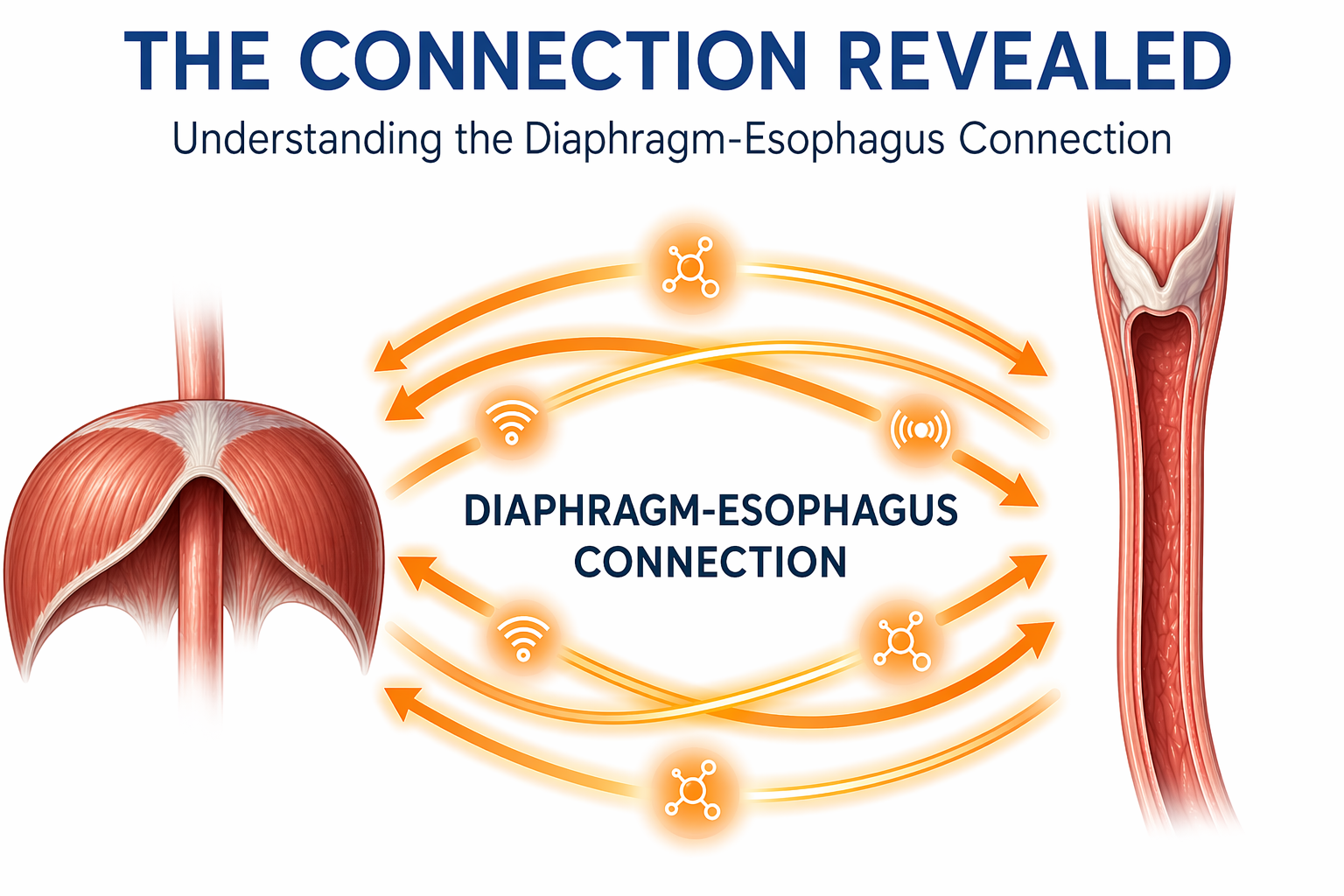
For decades, countless people have been misdiagnosed, never realizing that the real issue lies in the diaphragm - esophagus connection driven by a weak lower esophageal sphincter (LES).
For years, symptoms like a heartburn, reflux, abdominal discomfort, constant lump sensation and unexplained coughing have been grouped under acid reflux, allergies, or even recurring colds. But research has revealed something important: your diaphragm and esophagus influence each other .
Scientists call it the diaphragm-esophagus axis commonly known as Hiatal Hernia. Our diaphragm and esophagus are closely connected, and when digestive contents such acid and pepsin reflux travel upward, they can directly affect your esophagus, chest and throat.
However, when the diaphragm and lower esophageal barrier are properly supported, upward movement is reduced, preventing acid and stomach contents from reaching the esophagus, chest, or even the throat. As a result, reflux and heartburn can finally calm down, and the urge to clear your throat begins to fade. Instead of reacting throughout the day, your throat and esophagus remain clearer and more comfortable, allowing you to experience less burning, reduced reflux, and easier swallowing without that persistent disruption.
In contrast, when the diaphragm and lower esophageal barrier are weak and the valve is not functioning properly, stomach contents can repeatedly reach the esophagus and irritate the tissues there. This ongoing exposure keeps the area sensitive, contributing to symptoms such as heartburn and abdominal pain, and triggering protective reflexes like coughing, difficulty swallowing, and a lump-in-the-throat sensation. Instead of settling down, the cycle continues: irritation leads to more symptoms, and those symptoms keep returning because the underlying trigger has not been addressed.
Why Doctors Miss This: This often gets overlooked because most medical approaches focus on acid reflux, anxiety or heart conditions. Doctors typically look for excess acid, nerve dsyfunction, infection, or obvious inflammation. Hiatal Hernia behaves differently, as it does not always cause heartburn or show up on standard tests. So even when symptoms persist, the focus stays on acid or temporary illness while a weak diapghram and les barrier continues to drive the irritation in many cases.
The Fix: When you start supporting your Diaphragm and Lower Esophageal Sphincter (LES) barrier, you can help limit reflux and reduce how far it travels into the esophagus, chest, and throat. As this happens, the constant irritation may begin to settle.
The tissues are no longer being repeatedly triggered, so symptoms like heartburn, chest tightness, and throat irritation can start to improve, and the cycle of throat clearing and coughing may ease.
As the irritation calms down, your esophagus, chest, and throat can feel clearer and more stable. Instead of reacting throughout the day, your body can begin to function more comfortably and steadily.
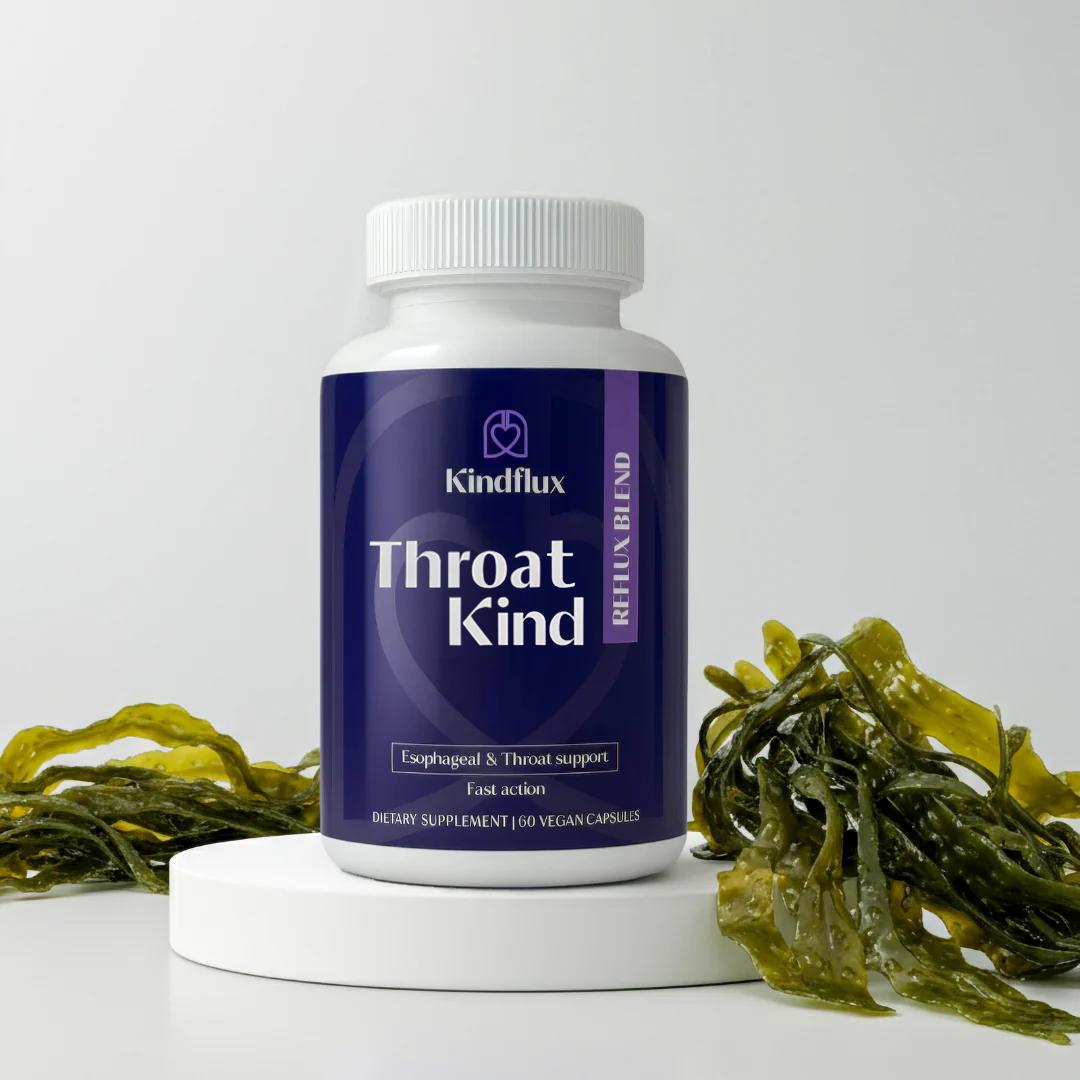
Meet Throat Kind. Our natural solution for supporting the diaphragm and esophagus axis.
Throat Kind was designed to support the diaphragm and esophagus axis by stopping stomach contents from leaving the stomach.
What Makes It Different:
✅ Manage heartburn and reflux source: Throat Kind helps by forming a gentle physical barrier that reduces the backflow of acid and stomach contents, supporting overnight protection and long-term throat comfort.
✅ Works from the inside out — Supports the weak diapghram and esophagus barrier not just masking symptoms like PPI's and anti-acids
✅ Made from natural ingredients — Made from a brown seaweed called alginates it helps manage pepsin in throat
✅ Physician-formulated and third-party tested — no artificial additives, gluten-free, vegan
✅ Fast-acting — Most people notice less heartburn, chest discomfort and lump in throat symptoms within the first 2 hours
See what people are saying:
"I used to go to bed every night dreading the burning in my chest — that tight, heavy pressure that woke me up at 3am. My heart would race and flutter, and I couldn't tell if it was my heart or my stomach. My doctor said it was "just acid reflux" and told me to take antacids. After just a few days of using Throat Kind, the burning is gone, my chest feels calm, and I'm finally sleeping through the night. I can't believe I spent 3 years thinking this was just something I had to live with."
."
— Smith T., 47 | ★★★★★
"Every meal ended the same way — that stuck, tight feeling in my throat like something was lodged there that wouldn't move. Swallowing felt like a chore I had to concentrate on, and drinking water only seemed to make the lump worse. My doctor ran tests and couldn't find anything. After my first night with Throat Kind, I woke up and ate breakfast without once thinking about my throat. That feeling of just eating normally again — I hadn't realized how much I missed it.."
— Lee K., 67 | ★★★★★
"Nights were the worst. I would lie down and feel the burn start creeping up — that hot, acidic feeling rising in my chest and into my throat the moment I got horizontal. I'd prop myself up with pillows, avoid eating after 6pm, and still wake up at 2am with that familiar fire. Sleep became something I dreaded. Within a month of taking Throat Kind, my nights finally feel calm. I can lie down flat, sleep through without waking, and get up in the morning without that burning lingering in my chest."
"
— Angela M., 54 | ★★★★★
"I was skeptical. I had tried antacids, diet changes, elevating my bed — everything , for the constant burn in my chest and that acidic taste that crept up after every meal. But overnight, I stopped waking up with that familiar fire in my throat. By week 3, the reflux had settled to the point where I could eat a normal meal without bracing for what came next. The burning had calmed down and barely bothers me anymore. Even my gastroenterologist commented at my last appointment ,she asked what I had changed because my symptoms had improved so noticeably"
"
— Wes P., 58 | ★★★★★
Try It 100% Risk-Free
We know you've probably tried other solutions that didn't work. That's why we offer a 60-day money-back guarantee
Try Throat Kind toady and experience control over reflux and heartburn.
If you don't notice an improvement in your esophagus and throat health after 60 days of using Throat Kind™, we'll refund your money back.
Throat Kind
Target diaphragm related reflux at it's Source
30 day-Money Back Guarantee
Frequently Asked Questions
Throat Kind
Target diaphragm related reflux at it's Source
30 day-Money Back Guarantee
This site is not a part of the Facebook website or Facebook Inc. Additionally, This site is NOT endorsed by Facebook in any way. FACEBOOK is a trademark of FACEBOOK, Inc.
These statements have not been evaluated by the Food and Drug Administration. This product is not intended to diagnose, treat, cure, or prevent any disease.. The information provided on this site is for informational purposes only and is not intended as a substitute for advice from your physician or other health care professional or any information contained on or in any product label or packaging. You should not use the information on this site for diagnosis or treatment of any health problem or for prescription of any medication or other treatment. You should consult with a healthcare professional before starting any diet, exercise or supplementation program, before taking any medication, or if you have or suspect you might have a health problem.
Medical Disclaimer: The content is not intended to be a substitute for professional medical advice, diagnosis, or treatment. Always seek the advice of your physician or another qualified health provider with any questions you may have regarding a medical condition. Never disregard professional medical advice or delay in seeking it because of something you have read on this website.